5 lessons Valorant players can take from a lowest to highest rank climb
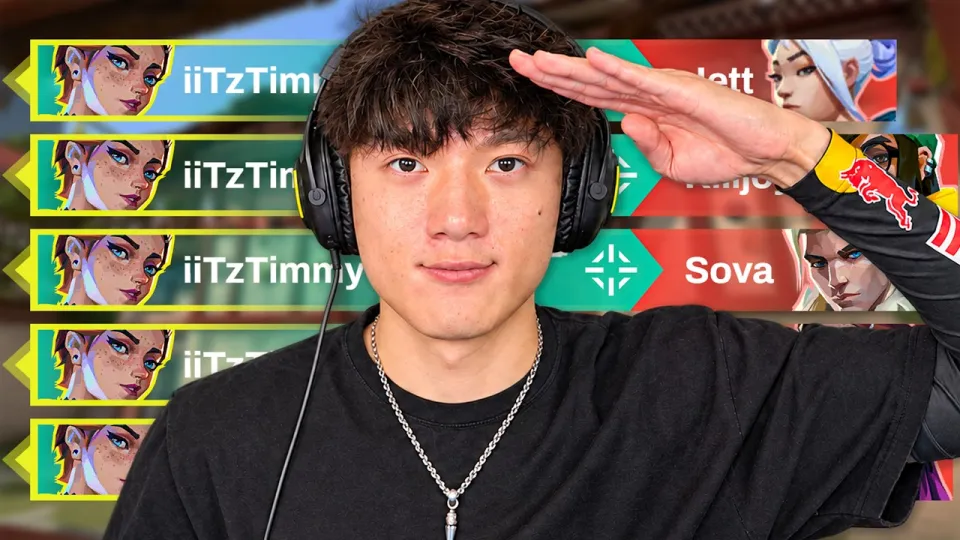
Video: I Might Be Getting TOO Good at Valorant… (Lowest To Highest Rank Challenge)
Need articles like this for your video? They help promote it on YouTube and Google — order them in the Telegram bot @sat_sit_bot. The bot writes and publishes the articles itself (with your YouTube video embedded) on popular topical websites (no ads). Free trial — 50 articles.
· based on the channel iiTzTimmy Two
A lowest to highest rank climb in Valorant is a stress test of fundamentals: the same player, the same game, but opponents who get better every division. The point of such a run — like the one iiTzTimmy Two streams on his Twitch channel — is that the habits separating Iron from Radiant are mostly mental and structural, not raw flick speed. Below are five lessons a rank climb exposes, each one usable in your own queue tonight.
1. The climb is a fundamentals check, not an aim contest
A lowest to highest rank run works because nothing in the game changes except the quality of the opposition, so every weakness gets amplified in order. In low elo, a strong player wins duels with raw mechanics and map knowledge; by Platinum and Diamond, opponents start trading kills and holding angles properly, and the free entries dry up. That is the moment when crosshair placement, counter-strafing and utility usage stop being optional. If you want to replicate the exercise, pick one account, play a fixed number of games per session and track your first-blood and first-death counts rather than your K/D. The pattern tells you more about your rank ceiling than any single highlight.
2. Tilt and invented comms lose more rounds than bad aim
Tilt is a mechanical disadvantage disguised as an attitude problem. A player who starts narrating imaginary enemy positions, nitpicking teammates' utility and blaming the team for a lost site will call wrong rotations and stop listening to real information. In a climb, that behaviour shows up fast: the same lobby that looked easy in round one turns into a chain of lost retakes once one person stops communicating honestly. Practical fixes are boring but effective — mute yourself for one round instead of arguing, repeat only confirmed info ("three mid, one rotating"), and treat every death as a positioning question before a teammate question. Mental stability is the cheapest rank upgrade available.
3. Entry timing and site discipline decide close games
Being first into site is not automatically a mistake, but being first with no trade behind you is. The recurring pattern in low-rank lobbies is a player who commits to an entry, dies alone, and then blames the team for not following — when the actual error was entering before the team had utility or bodies in position. Good entry discipline looks like this: wait for smokes or flashes to land, call your intention out loud, and only go when at least one teammate is close enough to trade. On defence, the mirror rule applies — do not peek the same angle twice in a row without repositioning, because a competent opponent will pre-aim it the second time.
4. Agent picks should follow the lobby, not your comfort zone
Comfort picks win games up to a point, then become a liability. A controller or sentinel main who never swaps will eventually meet lobbies where the team has no duelist pressure or no recon, and the round structure collapses before the first shot. In climb content you can see how quickly a flexible player adapts: switching to a self-sufficient agent when teammates refuse to entry, or to a utility-heavy pick when the team already has fraggers. The rule of thumb is one main agent for consistency plus two pocket picks that cover a missing role. Learn one setup and one post-plant pattern for each, and you will rarely be the reason a draft fails.
5. Mechanics have a floor, and it is lower than you think
Aim matters, but the floor is reachable. Consistent crosshair placement at head height, a sensitivity you never change, and a warm-up routine of 10–15 minutes of aim training or deathmatch will carry you through Gold and Platinum without any extraordinary talent. What separates Ascendant from Immortal is usually decision speed: how fast you process a call, reposition, and commit. Players who blame their mouse, their FPS or their setup stall at the same rank for months, while players who review one lost round per game improve steadily. If you have buttery frames and a good mouse, the remaining variable is you.
Common questions from ranked grinders
Three themes dominate discussion around climb videos: how much of a rank gap is pure aim, whether a high-level player smurfing distorts the picture, and how to deal with a teammate who tilts early. On aim: mechanics decide duels, but rotations, trades and utility timing decide rounds, which is why a mechanically average player with good discipline can reach Diamond. On smurfing: a Radiant-level player climbing from low elo will win almost every duel, so copy the structural habits — trading, comms, positioning — rather than the raw stats. On tilt: the fastest fix is to stop feeding the argument, mute if needed, and give the team one clear piece of information per round instead of commentary. And yes, odd in-game moments like an ultimate that seems to vanish after a kill are worth reporting as bugs rather than arguing about mid-match.
Useful links
- Watch iiTzTimmy live on Twitch — full streams of the rank climb and other FPS games.
- iiTzTimmy on Twitter — schedule and clip updates.
- iiTzTimmy on Instagram — behind-the-scenes posts.
- iiTzTimmy on TikTok — short highlights.
- iiTzTimmy Discord — community and queue talk.
What a rank climb actually proves
A lowest to highest rank challenge is less about proving that a pro can beat Silver players and more about showing which habits survive when opponents stop making mistakes. The five lessons above — fundamentals over flick speed, mental stability over blame, disciplined entries, flexible agent picks and a reachable mechanical floor — are the same ones that decide ordinary ranked games. The format works because it removes excuses: same player, same game, different opposition. This breakdown was put together by the team behind the iiTzTimmy Two channel, whose rank climb series is the reference point for the discussion. If you want to see the run continue live, join the stream on Twitch and compare your own habits against what happens on screen.
Key takeaways
- The challenge format: start at the bottom of the ranked ladder and grind up toward Radiant, one account at a time.
- iiTzTimmy Two's run shows how quickly a high-level player punishes low-rank habits like solo entries and silent comms.
- Tilt is the biggest rank-killer: a teammate who invents calls and blames the team loses more rounds than any aim gap.
- Mechanics matter less than positioning and timing until the high Diamond and Ascendant range.
- Watching your own VODs and copying one habit at a time beats grinding ten games on autopilot.
Source: I Might Be Getting TOO Good at Valorant… (Lowest To Highest Rank Challenge) · Markdown version
Questions & answers
How long does it take to climb from Iron to Radiant in Valorant?
There is no fixed number, because it depends on win rate, MMR gains and how many games you play per week. A very strong player can move several divisions per session early on, but progress slows sharply around Diamond and Ascendant where gains per win shrink. Most realistic climbs take hundreds of games, not dozens.
Is aim or game sense more important for ranking up in Valorant?
Aim sets your ceiling in duels, but game sense sets your floor. Crosshair placement and a stable sensitivity will carry you through Gold and Platinum, while rotations, trading and utility timing are what separate Diamond from Immortal. Most players stall because they train aim and never review their decisions.
Why do teammates in low ranks blame the team instead of fixing their own play?
It is easier to describe a teammate's mistake than to review your own positioning. The problem is that blame consumes attention that should go to comms and rotations, so the whole team plays worse. Giving one clear call per round instead of commentary usually improves results faster than arguing.
Should I switch agents to climb, or stick to one main?
Keep one main for consistency and add two pocket picks that cover roles your team lacks, such as a duelist or an initiator. Learn one setup and one post-plant pattern for each pick. Full flexibility is not required until high ranks, but zero flexibility becomes a liability in Diamond lobbies.